Pakistani Wedding Traditions Explained
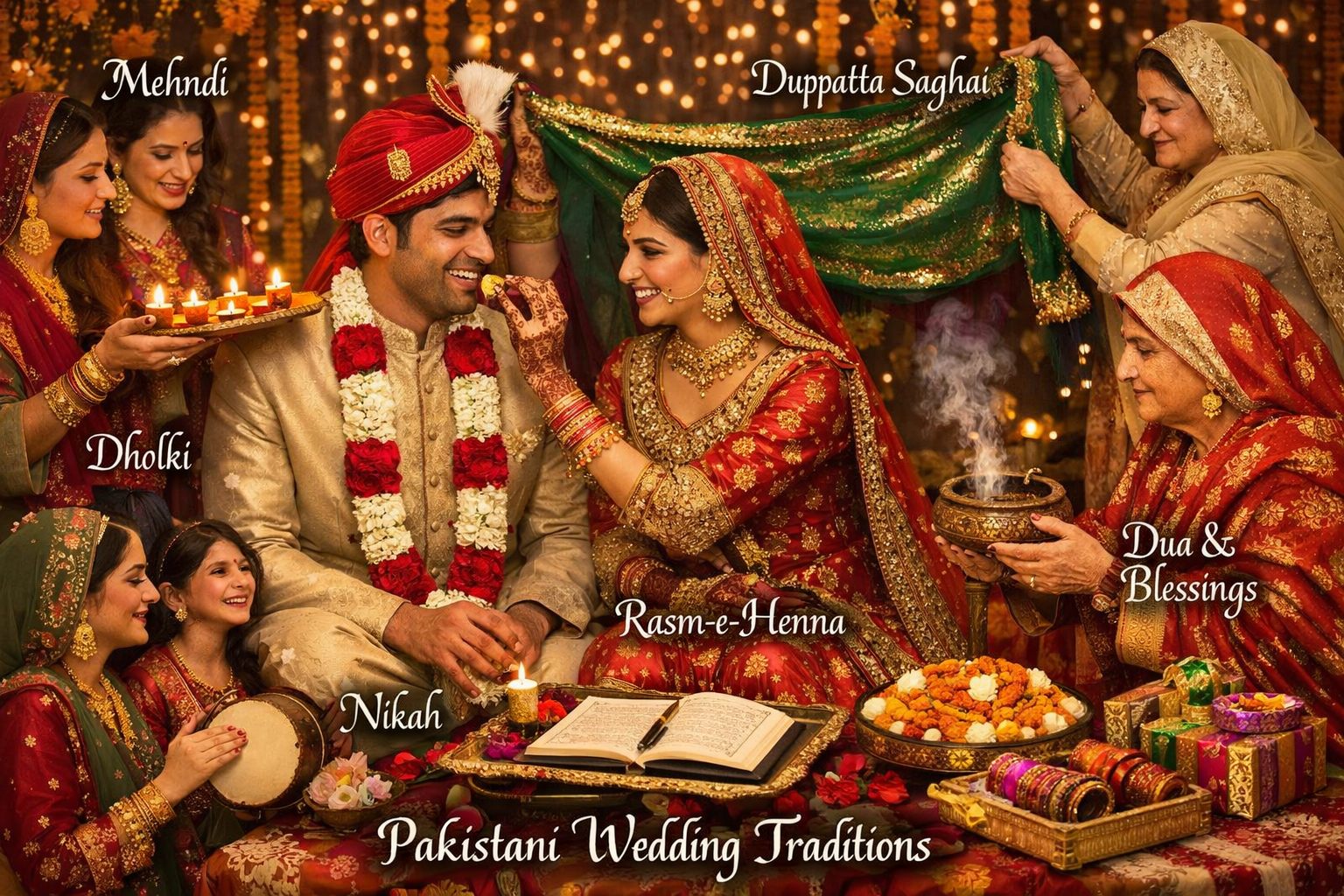
A Pakistani wedding is not merely the union of two individuals — it is the beautiful merging of two families, two traditions, and two worlds. Our weddings are filled with colours, joy, music, delicious food, and above all, love. Every ritual carries its own purpose and beauty, passed down through generations with pride and devotion.
Let us walk you through every important ceremony that makes a Pakistani wedding truly special.
1. Mangni (Engagement) — The First Seal of the Bond
The Mangni is the blessed moment when both families formally agree to the union. It is usually an intimate ceremony where elders offer their prayers and blessings, rings are exchanged, and mithai (sweets) are distributed. The groom's family visits the bride's home to formally ask for her hand. In Punjab, this is also known as "Pakki Baat."
"The Mangni is essentially a promise between two families — that from today, we are one, and we shall remain united forever."
The bride is presented with beautiful clothes, jewellery, and gifts on this occasion. The ceremony usually takes place weeks or even months before the wedding.
2. Dholki — The Sound of Celebration
Dholki is one of the most joyous traditions of Pakistani weddings. A few days before the wedding, women and girls gather at home, play the dholki (a small drum), sing traditional wedding songs, and dance together. These celebrations usually take place separately at both the bride's and groom's homes.
Traditional songs like "Mere Mehboob Ka Roop Nirala," "Allah Hoo," and Punjabi Tappay make the Dholki evening truly memorable. Nowadays, Dholki celebrations are also held in banquet halls with DJ setups and professional sound systems.
3. Mayoon — The Bride's Preparation Begins
Mayoon is the ceremony where the bride is beautified and prepared for her big day. A paste of haldi (turmeric) and oil is applied to the bride's skin to give her a natural glow and radiance. The bride wears yellow clothing — symbolizing happiness and blessings. Mayoon usually takes place one or two days before the wedding.
During this time, the bride stays home and the women of the family take care of her. It is a time for the bride to spend her last precious moments with her own family before starting a new life.
4. Mehndi — The Festival of Colours
Mehndi is the most colourful and fun-filled event of a Pakistani wedding. It is the night of maximum dance, songs, and an atmosphere brimming with happiness. Beautiful henna designs are applied to the bride's hands and feet — the deeper the colour, the deeper the love, as tradition says.
Mehndi Night Highlights
- Bride dressed in green and yellow traditional attire
- Mehndi brought in decorated thaals with candles and flowers
- Friendly competitions and banter between bride's and groom's sides
- Dance performances on traditional and modern songs
- Henna artists creating intricate, beautiful designs
Today, Mehndi celebrations are held in banquet halls with stunning decorations, DJs, food stalls, and photo booths. At Ismail Palace, we make Mehndi nights truly unforgettable.
5. Nikkah — The Sacred Covenant
Nikkah is the most important ceremony in an Islamic wedding. It is the blessed moment when, in the presence of a Qazi or Maulana, and before witnesses, the bride and groom accept each other. The words "Qubool Hai" (I accept) are spoken three times, and the Nikkah Nama (marriage contract) is signed.
The Haq Mehr (dowry given by the groom to the bride) is determined — this is the bride's Islamic right. After the Nikkah, prayers are offered and sweets are distributed. This ceremony can take place at a mosque, home, or banquet hall.
6. Baraat — The Groom's Grand Arrival
Baraat is the grandest day of a Pakistani wedding. The groom arrives at the bride's home or hall accompanied by his family and friends, with a band, dhol (drums), and joyful cheers. The groom is adorned with a Sehra (veil of flowers) and arrives on a decorated horse or car.
The bride's family welcomes the Baraat. Grand feasts, stunning decorations, and elaborate stage setups are the hallmarks of this day. The Rukhsati (farewell) is the most emotional moment when the bride bids goodbye to her family and begins her new life.
"The moment of Rukhsati is filled with tears and prayers — it is when parents send their daughter off with heartfelt blessings and duas for her happiness."
7. Walima — The Groom's Grand Feast
Walima is the feast hosted by the groom's family after the wedding. It is a Sunnah of the Prophet Muhammad (PBUH) and holds great importance. At the Walima, the bride and groom appear together as husband and wife for the first time before guests. Grand food, beautiful decorations, and excellent hospitality define the Walima.
Walima food is typically grand — Biryani, Qorma, Nihari, Seekh Kebabs, Gulab Jamun, and Kheer are must-haves. At Ismail Palace, we host Walima feasts in a truly royal manner.
Post-Wedding Traditions
After the wedding, several beautiful traditions follow:
- Chauthi: On the fourth day after the wedding, the bride visits her parents' home
- Munh Dikhai: The new family presents gifts to the bride when they see her for the first time
- Quran Khwani: Recitation of the Holy Quran for blessings in the new home
Celebrate Your Wedding at Ismail Palace
At Ismail Palace, we host every wedding ceremony in a magnificent traditional style. Our experienced staff, beautiful décor, and delicious cuisine will make your wedding truly unforgettable.
Contact Us Today